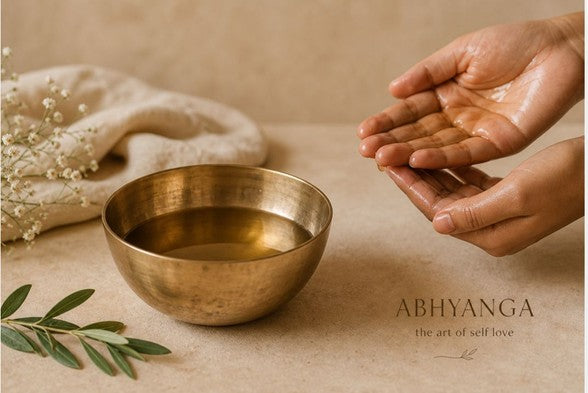
A simple daily ritual from Ayurveda to relax your body, nourish your skin, and calm your mind naturally

Abhyanga is not merely just oil massage it is more like complete therapy that leads to strength, clarity and nourishment of mind, vision, skin and health. Not something fancy but something sacred to people back from Vedic era.
🪷 What is Abhyanga?
Abhyanga is a traditional Ayurvedic body oiling therapy that involves applying warm oil to the body using specific strokes. It is a key part of the daily routine described in classical Ayurveda, designed to promote balance, relaxation, and overall well-being.
Unlike occasional spa treatments, Abhyanga is meant to be practiced regularly as a form of self-care.
🌿 Abhyanga Benefits
Regular Abhyanga massage offers a wide range of benefits:
- Reduces stress and anxiety
- Improves blood circulation
- Promotes deep and restful sleep
- Nourishes and hydrates the skin
- Strengthens muscles and joints
It is especially beneficial for calming Vata dosha, which is associated with dryness, fatigue, and restlessness.
📜 Ayurvedic Reference
Classical texts like the Ashtanga Hridaya recommend daily oil massage as part of a healthy lifestyle.
अभ्यङ्गमाचरेन्नित्यं स जराश्रमवातहः ।
दृष्टिप्रसादपुष्ट्यायु: स्वप्नसुत्वक्दार्ढ्यकृत् ॥
Abhyanga is described as a practice that helps reduce fatigue, delay aging, and improve overall strength—making it an important preventive health routine.
🛠️ How to Do Abhyanga at Home
You can easily practice Abhyanga at home in just 15–20 minutes.
1. Choose the Best Oil for Abhyanga
- Sesame oil → Best for Vata
- Coconut oil → Cooling, good for Pitta
- Mustard oil → Stimulating, suitable for Kapha
2. Warm the Oil
Slightly warm the oil for better absorption.
3. Apply Using Proper Technique
- Use long strokes on arms and legs
- Circular motions on joints
- Clockwise motion on the abdomen
- It is mentioned specifically to do abhyanga on head, ears and feet .
4. Leave It On
Allow the oil to absorb for 15–30 minutes
5. Take a Warm Bath
This helps remove excess oil and relax the body.

Step by step Abhyanga massage technique
🧠 Abhyanga for Modern Lifestyle
A daily full-body oil massage may not always be practical. Here’s how to adapt:
- Do Abhyanga 2–3 times a week
- On busy days, apply oil only to feet and scalp
- If you sit long hours, focus on neck and shoulders
Even a short routine can deliver noticeable Abhyanga benefits when done consistently.
⚠️ Common Mistakes to Avoid
- Using cold oil
- Doing Abhyanga right after meals
- Skipping bath after massage
- Applying too much oil
Traditional Tools for abhyanga : Kansa Wand and Gua sha
Along with hands and oil, some traditional tools can enhance Abhyanga. A Kansa wand is an Ayurvedic metal massage tool used to gently massage the face and body, helping improve circulation and relaxation. Similarly, Gua Sha is a scraping tool that supports lymphatic flow and muscle release when used with oil. Both are optional and mainly used for deeper relaxation and skin benefits.
Who Should Avoid Abhyanga?
Avoid or modify Abhyanga if:
- You have fever or acute illness
- You are experiencing indigestion
- You are advised to avoid oil therapies
Consult an Ayurvedic practitioner if unsure.
Final Thoughts
In today’s fast-paced lifestyle, Abhyanga offers a simple way to slow down and care for your body. This ancient Ayurvedic oil massage supports both physical and mental well-being.
Start small, stay consistent, and make Abhyanga a natural part of your routine.
Ready to Start Your Ayurvedic Routine?
Begin with Abhyanga just 2–3 times a week and notice the difference in your stress levels, sleep, and skin.
Start today with just 10 minutes of self-massage.
About the Author
Hello! I’m Dr. Shivani Soni, Ayurveda doctor and founder of Naav Ayurveda. I believe wellness is a lifestyle, not a routine. Through Ayurveda, mindful habits, and natural remedies, I help you glow inside and out. Follow us @naav_ayurveda for daily wellness inspiration!